
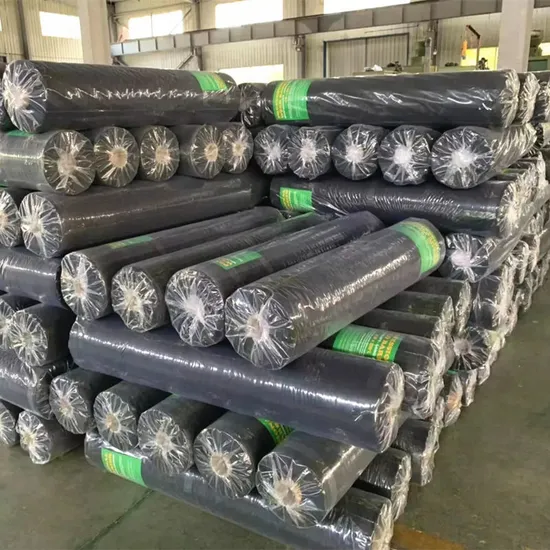
ZNY Agri manufactures agricultural mulch films for importers, distributors, agricultural projects and commercial growers that need specification-based soil covering solutions. Our range includes clear, black, silver-black, co-extruded and fully biodegradable mulch films. Common specifications cover 0.006–0.08 mm thickness, 0.5–4 m width and 50 m, 100 m or 200 m roll lengths, with custom options available for suitable orders. OEM and ODM services can cover PE or PBAT/PLA-based formulations, color structure, opacity, UV resistance, dimensions, perforation requirements, roll format and private-label packaging.
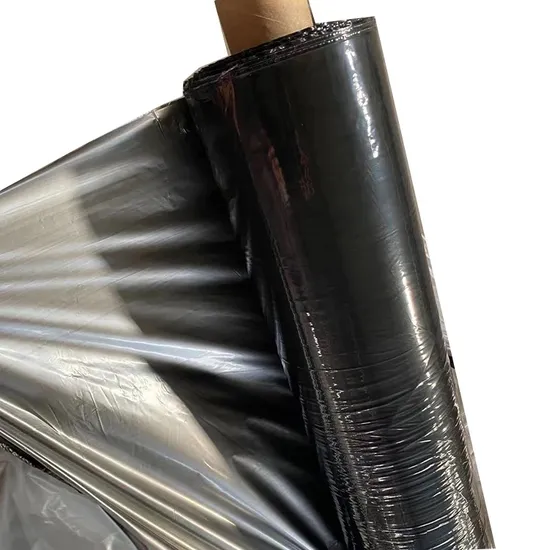
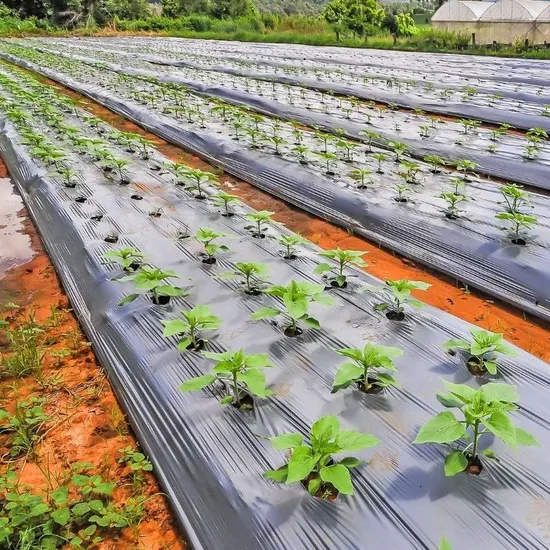
Agricultural mulch film is a thin soil-covering material used to manage moisture, temperature, light and weed pressure around crops. Clear film is commonly selected where soil warming is the priority, while black film limits light at the soil surface for stronger weed suppression. Silver-black film combines a reflective upper surface with an opaque underside, and co-extruded structures can place different functions on each side of the film. Fully biodegradable mulch film provides an alternative for markets seeking reduced film-retrieval work, but its formulation should be matched to crop cycle, climate, soil conditions and applicable certification requirements.
Production begins with a formulation based on PE resins or selected biodegradable materials, together with color masterbatch, antioxidants, UV stabilizers and other required additives. The blend is processed through blown-film extrusion, cooled and formed into a stable film tube before winding and slitting. For co-extruded mulch film, separate material layers are controlled to provide the required surface color, opacity or functional balance. Process control focuses on thickness uniformity, width, roll length, tensile behavior, elongation, appearance, winding quality and resistance to tearing during laying. Finished rolls are inspected and packed according to wholesale, project or private-label requirements.
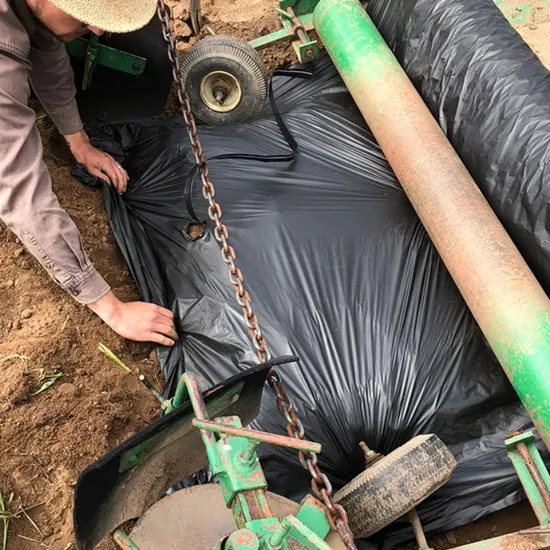
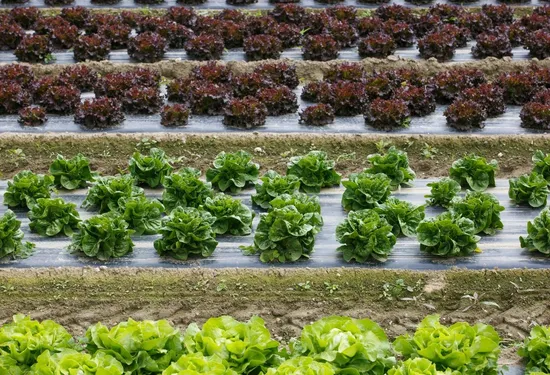
Suitable for tomatoes, peppers, cucumbers, leafy vegetables and other row crops where moisture conservation, soil-temperature management and cleaner planting beds can support more consistent crop establishment. Film color and thickness should be selected according to season and weed pressure.
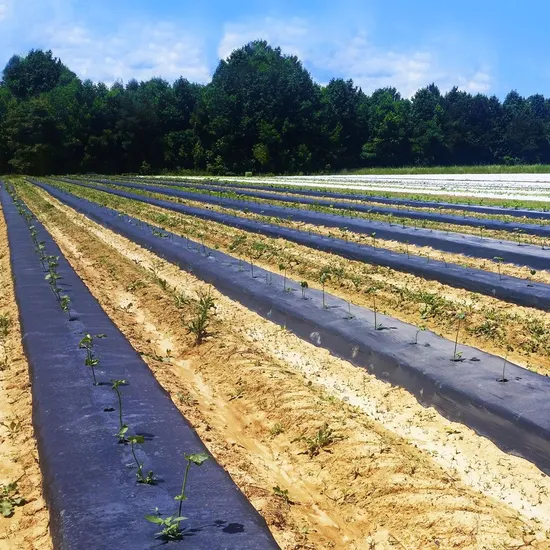
Used in watermelon, muskmelon and related crops to reduce soil-water evaporation, stabilize the root-zone environment and support earlier field establishment. Clear, black or silver-black structures can be selected according to climate and production objectives.
Provides soil coverage for strawberry and berry beds where moisture management, weed suppression and reduced fruit contact with wet soil are important. Width, color, perforation pattern and roll format can be adapted to the planting layout.
Designed for larger field-crop programs that require reliable roll consistency, mechanical laying performance and specification control. Thickness, tensile properties, width and roll length should be matched to equipment, field size and crop cycle.
Suitable for orchard rows, nursery production and protected cultivation where growers need moisture retention, cleaner soil surfaces or targeted weed control. PE and biodegradable options can be evaluated according to use period and post-season management requirements.
Share your target market, crop application and purchasing plan so the sales team can identify the technical and commercial information required for a practical recommendation.
Confirm film type, material, color, thickness, width, roll length, crop cycle, laying method, UV requirement, perforation, packaging and estimated order quantity.
Compare clear, black, silver-black, co-extruded or biodegradable mulch film options and select the structure that matches field performance, budget and market positioning.
Arrange available samples or a specification sample to review color, opacity, thickness, flexibility, surface appearance, roll presentation and general suitability.
Evaluate the film under your laying equipment, field or laboratory conditions and confirm whether dimensions, strength, opacity or formulation adjustments are required before production.
Approve the final specification, quantity, private-label packaging and shipping requirements, then proceed with production, inspection and order execution.
Click the button below or obtain relevant support through the contact information on the right