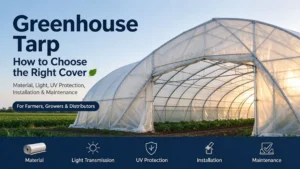
A greenhouse tarp can be a practical way to cover a hoop house, protect a temporary growing area, or replace a damaged section before the next crop cycle. But “greenhouse tarp” is a broad search term, not a guarantee that every tarp is suitable for growing plants. The right cover depends on light transmission, material, UV protection, dimensions, local weather, fastening, ventilation, and the length of time you expect it to stay outdoors.
This guide explains what to check before buying, how a greenhouse tarp compares with other covers, and how to install and maintain it safely.
What is a greenhouse tarp?
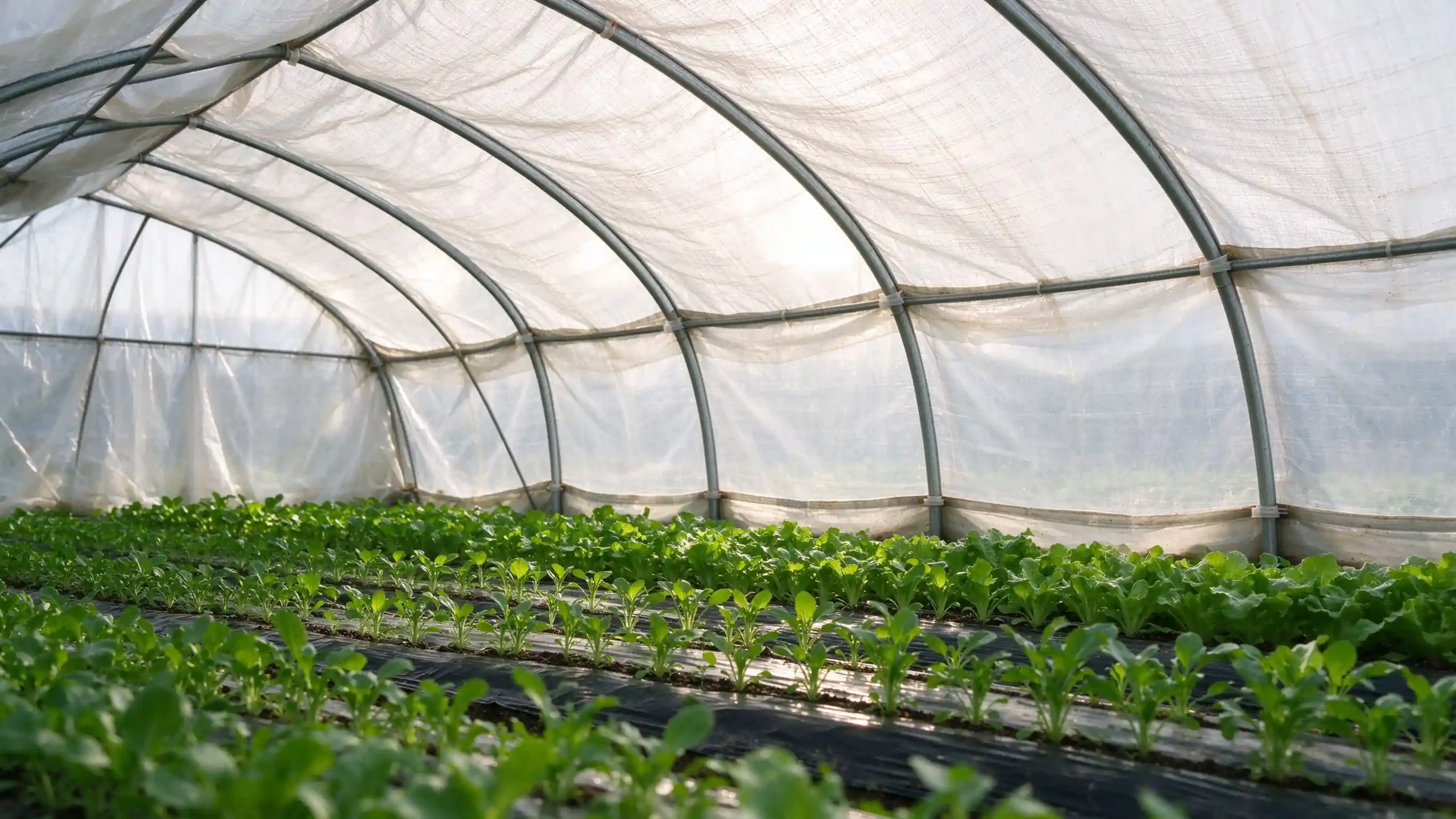
A greenhouse tarp is a flexible sheet used over a greenhouse, tunnel, nursery structure, or temporary plant-protection area. Some products are translucent and intended to pass useful daylight. Others are opaque and better suited to blackout, weather protection, temporary enclosure, or shade. Construction may include a coated fabric, reinforced plastic sheet, woven material, edge reinforcement, and attachment points such as grommets.
Because the label covers several product types, read the technical description rather than relying on the word “greenhouse.” Confirm the intended use, light information, UV treatment, dimensions, and installation method before ordering. Waterproofing by itself does not tell you whether a cover will provide an appropriate growing environment.
Six checks before choosing a greenhouse tarp
1. Material and construction
Look for the base material, coating or lamination, thickness or weight, edge reinforcement, and attachment details. A reinforced perimeter and evenly spaced attachment points can help distribute tension, but they still need to match the frame and fastening system.
Ask whether the cover is designed for temporary, seasonal, or longer outdoor exposure. A sheet made for a short weather event may not suit a permanent greenhouse. If service conditions are not stated, ask before purchasing.
2. Light transmission and diffusion
Plants need the right amount and quality of light for the crop, season, and location. A clear cover may pass more direct light, while a translucent or diffusing cover can spread light across the growing area. A shade-oriented cover reduces incoming light, and an opaque cover blocks it.
Do not assume that “clear” means a known light-transmission percentage. If crop production is the main purpose, request the manufacturer’s measured light-transmission information and ask whether it changes with the product’s color, thickness, coating, or number of layers. For a shade product, confirm the stated shade rate and whether it is intended to be installed over, under, or beside the greenhouse covering.
3. UV protection
Sunlight can make some plastics and fabrics brittle, yellow, or weaker over time. UV stabilization is a material feature intended to slow that type of degradation; it is not an unlimited-life promise. Ask what UV treatment is included, what outdoor exposure it is designed for, and whether the supplier publishes a service-life guide or warranty.
Installation also affects durability. Wind movement, rubbing against a rough frame, sharp edges, standing water, and repeated removal can shorten the useful life of a cover even when the material is UV treated.
4. Size, shape, and fit
Measure the frame before you buy. Record the length, width, height, roof profile, end walls, doors, vents, and the amount of material needed for secure attachment. A cover that is too small can leave gaps; too much loose material can flap, chafe, or collect water.
Allow enough overlap for the specified fastening method, but follow the supplier’s instructions rather than adding an arbitrary amount. If the structure includes doors or roll-up sides, plan how those areas will open without pulling on the main cover.
5. Weather and ventilation
Wind, rain, snow, hail, heat, and rapid temperature changes place different demands on a cover and frame. In windy locations, distribute tension and inspect the edges after severe weather. In snow or heavy-rain areas, confirm the structure is designed for the load and that water cannot pool.
A waterproof sheet can reduce air exchange if it covers vents or is sealed too tightly. Plan ventilation separately; a cover cannot substitute for a suitable frame and climate-appropriate ventilation.
6. Installation and maintenance
Before installation, remove or protect sharp edges and check that clips, straps, ropes, rails, or other fasteners are compatible with the material. Center the sheet, attach it progressively, and distribute tension instead of concentrating force at one corner or grommet. Avoid dragging the cover across the frame.
After installation, inspect for loose fasteners, water-holding wrinkles, rubbing points, tears, and gaps. Clean only as recommended; dirt can reduce usable light and harsh tools or solvents can damage a coating.
Greenhouse tarp vs. greenhouse plastic film
Greenhouse plastic film is a purpose-made covering category for protected cultivation. It is commonly selected when a grower needs a predictable covering system, known light behavior, or a planned seasonal replacement. Depending on the specification, films may be offered in different thicknesses, widths, roll lengths, UV-stabilized options, or light and thermal features.
A greenhouse tarp may be the better fit when the priority is flexible, removable, or temporary protection. It can also be useful for a replacement or repair when a permanent film system is not ready. The trade-off is that a generic tarp may not provide the same documented optical, thermal, or installation characteristics as a greenhouse film.
ZNY Agri’s public information lists greenhouse film with customizable thickness, width, and roll length, plus options that may include UV stabilization and light or thermal features. Confirm the exact grade and specification for your project before treating any option as a substitute for a tarp.
Greenhouse tarp vs. shade cloth
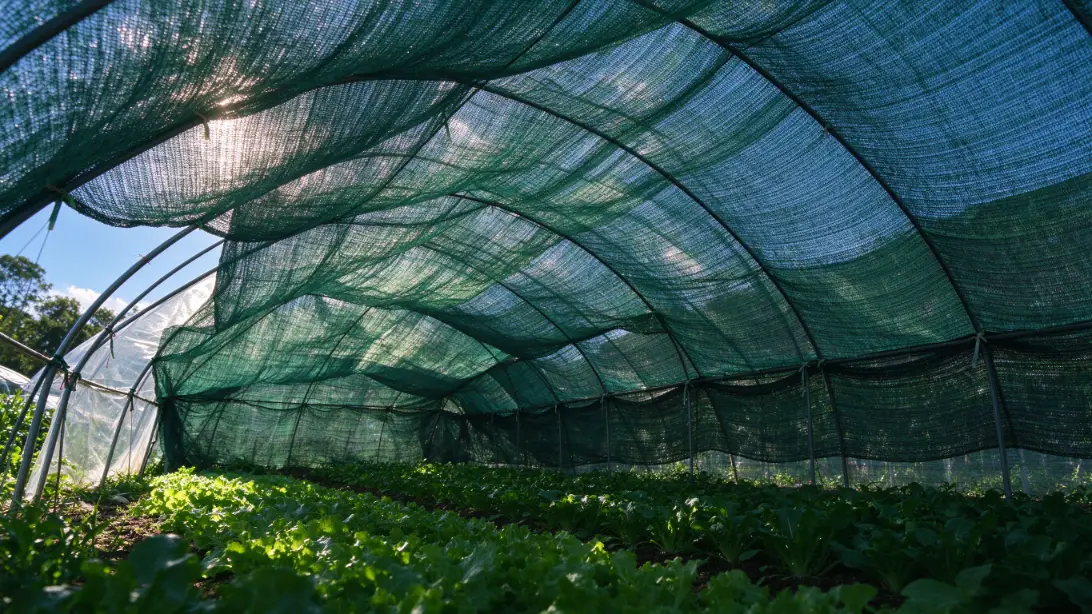
Shade cloth is a mesh covering designed to reduce sunlight while maintaining airflow. It is useful when excessive solar radiation or heat is the problem, but it is not a waterproof greenhouse roof. Shade rate, mesh construction, color, width, and attachment method all affect the result.
ZNY Agri’s public shade net information describes HDPE shade nets with 30–95% shading rates, widths from 1–20 m, and custom roll lengths, colors, and packaging for suitable orders. That makes shade net a better comparison when the goal is light reduction and ventilation—not rain exclusion. In many projects, a grower uses a greenhouse film or other weather cover first, then adds shade cloth when the crop and climate require additional solar control.
Greenhouse tarp vs. an ordinary waterproof tarp
An ordinary waterproof tarp is usually designed to keep equipment, vehicles, or materials dry. It may be opaque, may have limited light data, and may not be designed for the temperature, airflow, or crop requirements inside a greenhouse. It can be useful for temporary exterior protection, but “waterproof” does not establish that it is a horticultural covering.
If you are considering a general-purpose tarp, confirm its light behavior, UV treatment, dimensions, edge strength, and intended exposure. If details are unavailable, limit it to short, non-growing protection.
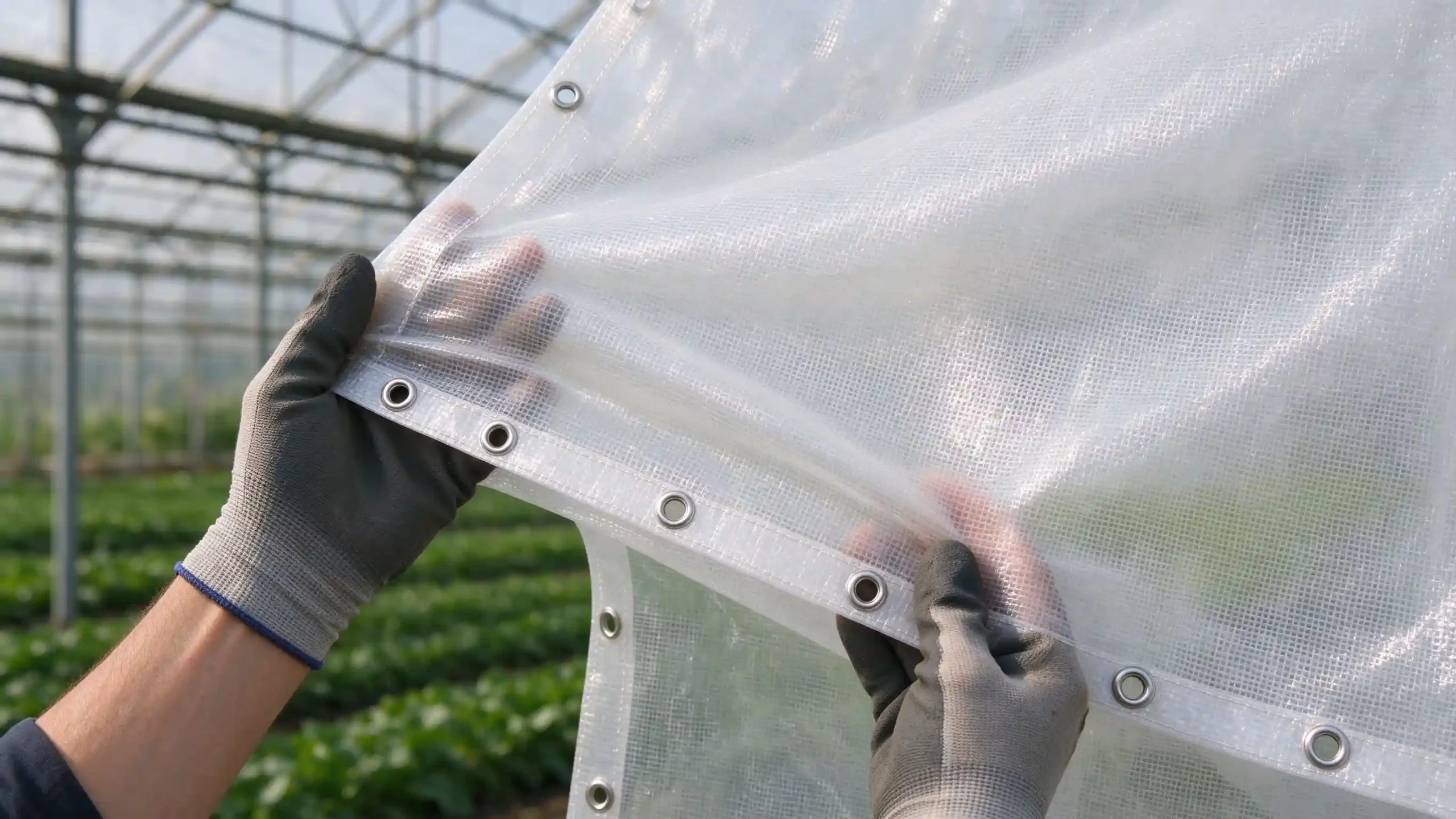
How to install a greenhouse tarp securely
- Measure the complete structure and calculate the coverage area, overlaps, doors, vents, and end walls.
- Inspect the frame and pad or remove sharp contact points.
- Lay out the cover and confirm the correct side and orientation.
- Center the sheet before attaching the first edges.
- Use compatible fasteners and work around the structure so tension is distributed.
- Keep vents and access points usable; do not seal the structure without a ventilation plan.
- Recheck the cover after the first period of wind or rain and correct rubbing, pooling, or loose attachment.
Do not use improvised weights or fasteners that can damage the frame or create a hazard. Follow the product instructions for spacing, overlap, cleaning, and severe-weather removal.
Greenhouse tarp maintenance checklist
Inspect the cover regularly and after severe weather for tears, worn edges, loose fasteners, water pooling, abrasion, blocked light, and gaps. Repair or replace damage before it spreads.
Store a removable cover clean and dry, folded without sharp creases, and protected from sunlight. Record the installation date and severe-weather exposure. Follow the manufacturer’s service-life guidance.
For broader project planning, ZNY Agri’s products page and greenhouse agriculture solutions page provide verified starting points for related greenhouse and crop-protection categories.
Frequently asked questions
Can I use any waterproof tarp as a greenhouse tarp?
No. Waterproofing does not confirm suitable light transmission, UV protection, ventilation, fit, or outdoor service life. Check the product’s intended application and technical information first.
Is a clear greenhouse tarp always the best choice?
Not always. A clear or translucent cover may suit crops that need daylight, while a shade or opaque cover may be appropriate for heat control, blackout, temporary enclosure, or weather protection. Choose according to the crop and the structure’s climate needs.
How do I secure a greenhouse tarp in windy weather?
Use a compatible attachment system, distribute tension, protect the sheet from sharp edges, and inspect it after wind or rain. If the frame or cover is not designed for severe weather, follow the manufacturer’s guidance on reinforcement or temporary removal.
Should I choose greenhouse plastic film or a tarp?
Choose greenhouse film when you need a purpose-made covering with documented growing characteristics. Choose a tarp when flexible, removable, or temporary protection is the main requirement. Compare the actual specifications instead of choosing by appearance or price alone.
Is shade cloth a replacement for a greenhouse tarp?
Usually not. Shade cloth reduces sunlight and allows airflow, but it is not normally a waterproof cover. It may be used with a weather cover when the crop needs additional solar protection.
How long will a greenhouse tarp last?
There is no universal lifespan. Material, UV exposure, wind movement, abrasion, installation, cleaning, and storage all matter. Use the manufacturer’s stated guidance and replace the cover when inspection shows degradation.
Final thoughts
Choosing a greenhouse tarp starts with the growing environment, not just the word “tarp” or the listed size. Compare material, light transmission, UV protection, fit, weather exposure, fastening, ventilation, and maintenance requirements before you buy.
If you are planning a greenhouse or crop-protection project, contact ZNY Agri with the structure dimensions, crop, climate, intended use, and required cover behavior. The team can confirm which verified product category and specification fits the project. Ask for the current datasheet before relying on any exact material, size, UV, light-transmission, warranty, or service-life claim.