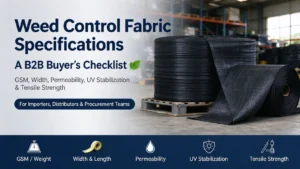
Why Weed Control Fabric Specifications Matter
Two rolls can look similar in a photograph and still behave differently during handling, installation, irrigation, or outdoor exposure. A small change in width may create more seams on a nursery floor. A different GSM can affect roll weight and installation labor. A different surface structure can change drainage, cutting, anchoring, or the way mulch and stone sit on the fabric.
For repeat purchasing, specifications also protect consistency. An importer or distributor can compare a new production lot with the approved sample instead of relying on a general description. A good specification sheet should identify what will be produced, how it will be measured, and which details remain subject to order-level confirmation.
Start With the Application, Not the Product Name
Before reading numbers, describe the job the fabric must perform. Record the crop or landscape use, the expected exposure, the covering material, and the installation method.
Useful application notes include:
- Orchard, vineyard, greenhouse aisle, nursery container area, farm path, or landscape bed
- Exposed installation or placement below mulch, bark, gravel, or stone
- Drip irrigation, overhead irrigation, rainfall, or a combination
- Expected foot traffic, equipment movement, or container handling
- Temporary project, seasonal use, or a longer outdoor purchasing program
- Required planting lines, perforation, printing, or private-label packaging
This information helps a supplier explain which fields are essential. It also prevents a buyer from selecting a fabric only because it has a higher number in one category.
The Main Fields in a Weed Control Fabric Data Sheet
Material and manufacturing structure
Ask the supplier to identify the polymer and construction clearly. The quotation should state whether the proposed material is PP, PE, woven, needle-punched, non-woven, or another agreed structure. If more than one layer or treatment is used, request a short description of each layer.
The structure should be connected to the application. For example, a buyer may need a stable sheet for long rows, a flexible layer for separation, or a surface that can be cut and anchored repeatedly. Avoid treating “woven” or “non-woven” as a performance guarantee. The sample and technical data should support the selection.
GSM and thickness
GSM means grams per square meter and is commonly used to describe basis weight. It helps a buyer compare material quantities, but it does not replace information about construction, strength, drainage, or UV requirements. A higher GSM may increase roll weight and handling demands; it is not automatically the best choice for every installation.
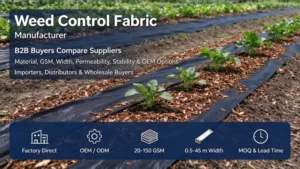
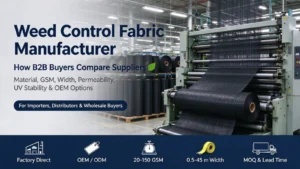
The ZNY Agri page shows 20–150 gsm as a common range. That range is a reference point, not a promise that every weight can be paired with every width, roll format, color, or construction. Put the requested basis weight, allowable variation, measurement method, and sample reference on the order documents.
Thickness can be useful for non-woven or needle-punched products, but thickness may vary with test pressure and measurement method. If thickness is important, specify the unit, test condition, and acceptable tolerance rather than requesting a number without context.
Finished width, roll length, and tolerances
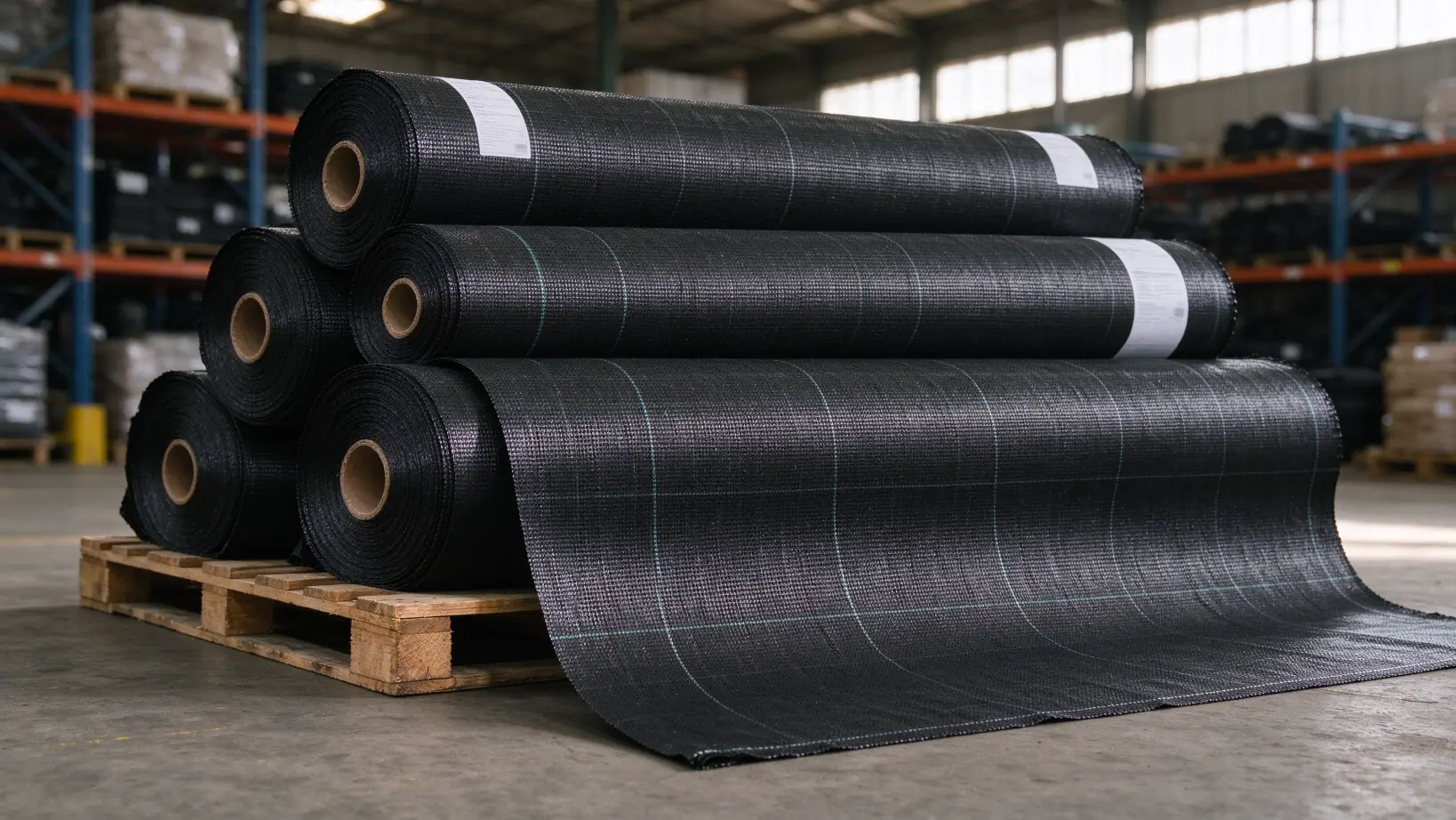
Dimensions affect installation time, seams, shipping, and storage. The published options include widths between 0.5 and 45 m, with 50 m and 100 m rolls shown as common formats. For a quotation, record finished width, coverage width, roll length, core, winding direction, and dimensional tolerance as separate fields.
Buyers should also ask whether the stated width includes the edge or represents the usable coverage width. For large greenhouse aisles or farm paths, a wider roll may reduce seams but require more labor or equipment to position. For nursery benches or narrow rows, a smaller roll may reduce cutting waste.
Water permeability and airflow
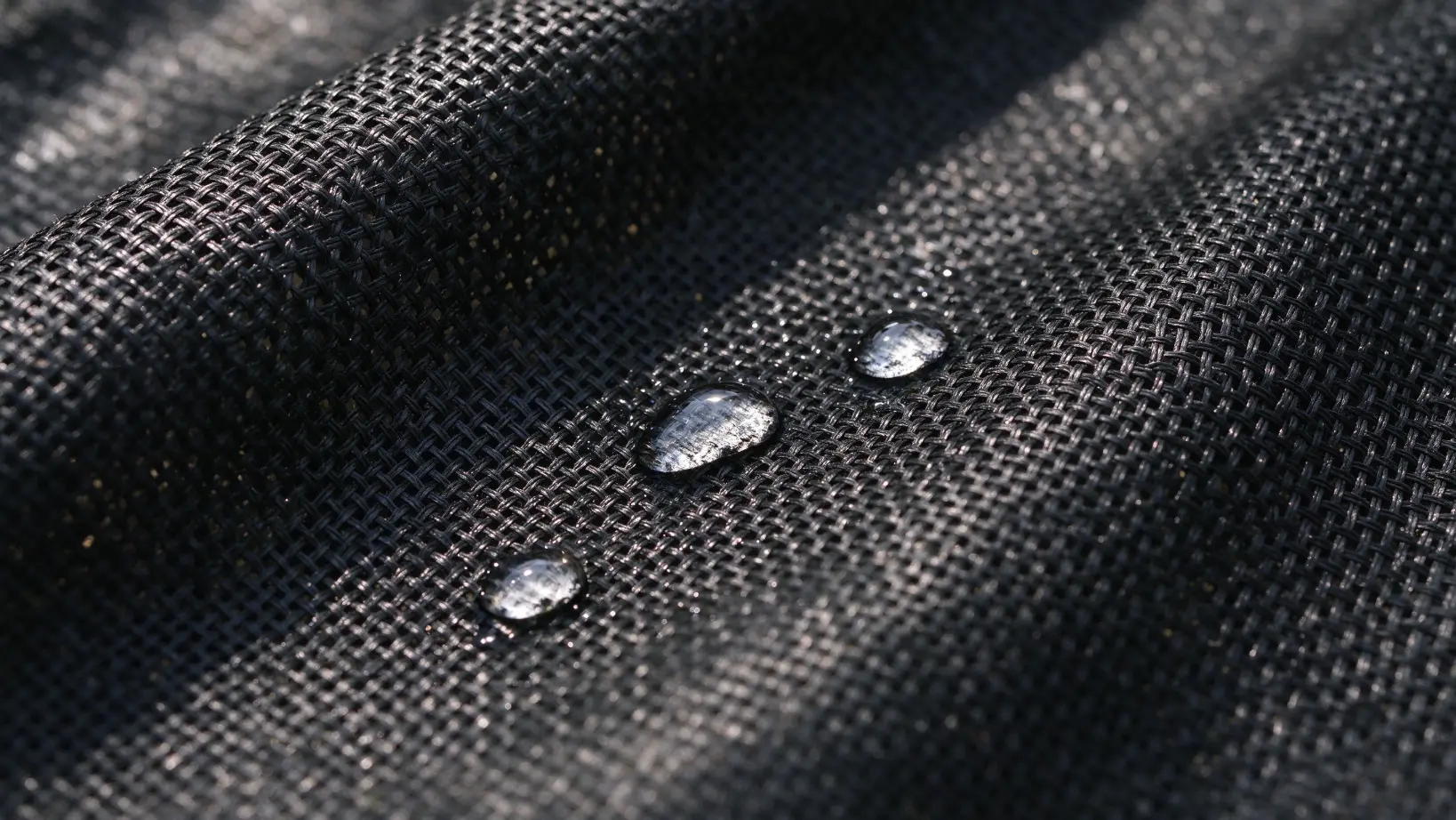
Ground cover is normally used to limit light at the soil surface without creating an impermeable sheet. Flow through the fabric is influenced by the polymer, basis weight, structure, surface treatment, soil, and installation method. If drainage is a project requirement, the data sheet should name the measurement unit and test basis instead of relying on a general adjective.
Describe how water reaches the surface. Drip lines, overhead irrigation, rainfall, and container drainage can place different demands on the fabric. If the fabric will sit beneath gravel or mulch, explain whether water must move quickly through the covering layer or whether soil separation is the priority.
Do not accept “water permeable” as a complete specification. Request the sample, the test basis if available, and installation guidance for overlaps, edges, planting holes, and anchors.
UV stabilization and exposure requirements
Outdoor sunlight can affect synthetic fabrics over time. Check whether UV stabilization is part of the quoted construction, how that treatment is recorded, and whether guidance exists for the intended climate. If a supplier gives an outdoor-life estimate, ask which exposure conditions and assumptions support it.
The words “UV resistant” do not by themselves define a guaranteed outdoor life. Exposure depends on latitude, season, covering, color, installation, temperature, and handling. Put the agreed UV requirement into the written specification and keep any supporting test or product document with the approved sample.
Tensile, tear, puncture, and edge behavior
Strength requirements should match the way the fabric will be installed and used. Consider rolling, cutting, pinning, moving containers, walking, equipment contact, and placement of stone or mulch. Ask how the supplier evaluates tensile performance, tear resistance, puncture resistance, edge stability, and width consistency.
For woven fabric, buyers may request results in the principal directions of the material. For needle-punched or non-woven fabric, puncture, thickness, drainage, and edge behavior may deserve greater attention. The correct test method and unit should be listed rather than assumed.
If the project needs reinforced borders, eyelets, printed lines, pre-cut holes, or a particular cut-edge finish, include those items in the data sheet. They should not be left as informal instructions after the purchase order is approved.
Planting Lines, Perforation, Color, and Packaging
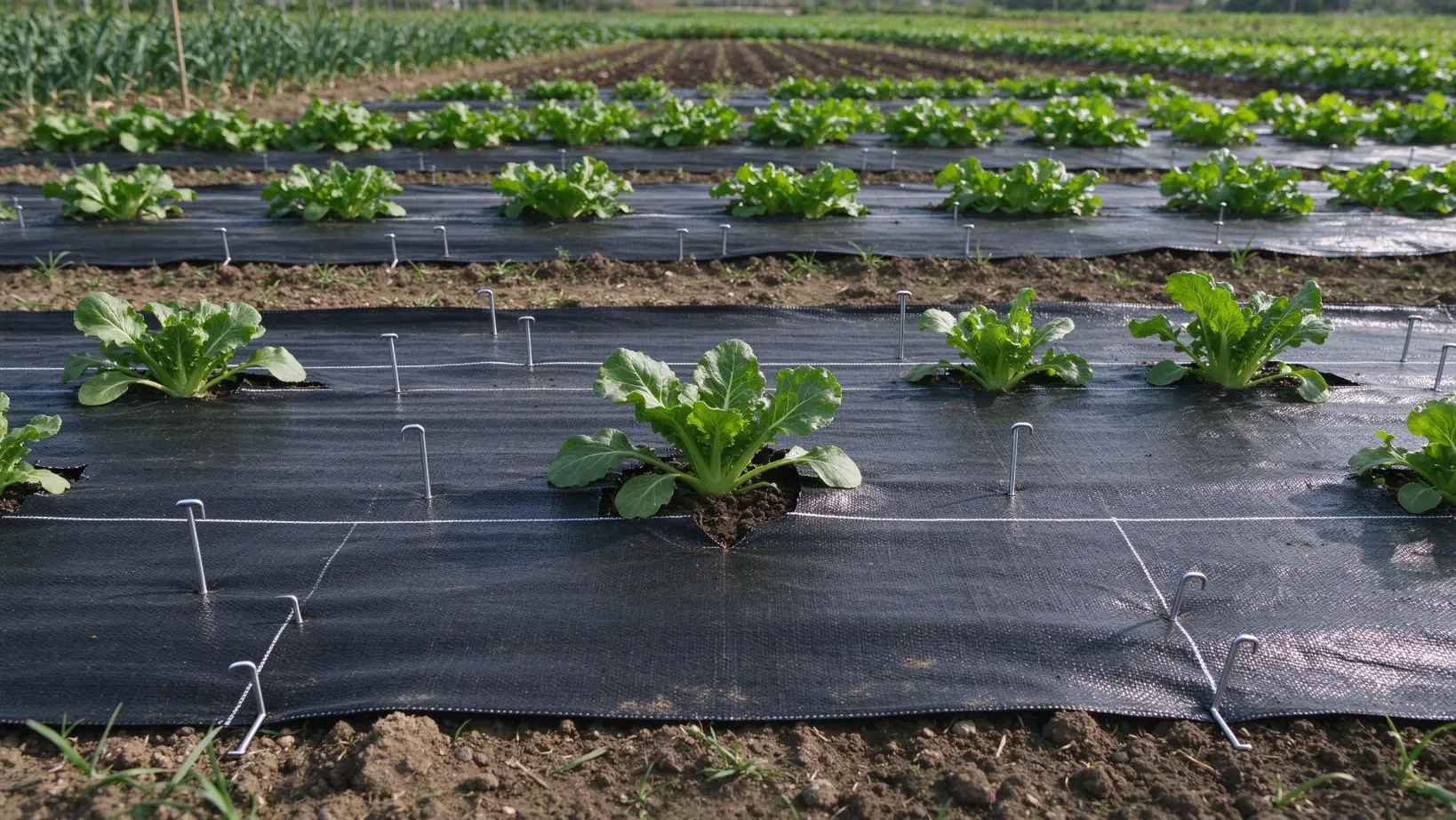
Some projects benefit from alignment features that make repeated planting or container placement easier. ZNY Agri identifies planting lines and perforation as available customization categories. Before approval, specify line spacing, line color, hole size, tolerance, roll direction, and whether the sample represents the production layout.
Color should be recorded because it affects identification and market presentation, but color alone is not a technical performance measure. For distributors, packaging can be just as important as the fabric itself. Confirm labels, woven bags, cartons, pallets, roll tags, barcode requirements, and private-label artwork before production.
How to Compare a Quotation With the Approved Sample
Use a side-by-side checklist rather than comparing only the unit price. At minimum, match:
- Polymer and construction
- GSM and thickness, if applicable
- Finished width and roll length
- Permeability or drainage requirement
- UV requirement and supporting documentation
- Tensile, tear, puncture, and edge criteria
- Planting lines, perforation, printing, and color
- Packaging and roll presentation
- Sample identification and inspection points
- Quantity, destination, and order-specific commercial terms
If a quotation uses a different unit, convert it before comparing. Keep GSM and ounces per square yard separate unless the conversion and tolerance are clear. Likewise, do not compare a nominal width from one supplier with a usable width from another.
A Practical RFQ Template for Wholesale Buyers
An effective request for quotation can be short, but it must be specific. Include:
- Application and installation location
- Preferred material or structure, if known
- Target GSM or expected duty
- Finished width, roll length, and quantity
- Irrigation and drainage conditions
- UV exposure and covering material
- Planting-line, perforation, printing, or edge requirements
- Color, labels, packaging, and private-label needs
- Destination country, import paperwork, and required export documents
- Sample request and desired approval process
Ask the supplier to separate published options from items that need order-level approval. ZNY Agri’s page describes OEM/ODM categories covering resin choice, basis weight, construction, color, light-stability treatment, planting marks, punched openings, winding format, and branded packing. Minimum quantity, capacity, schedule, inventory, price, and shipping terms still belong in the written quotation.
Common Specification Mistakes
Choosing the highest GSM without checking installation
A heavier roll may increase handling and shipping requirements. Match basis weight to exposure, puncture risk, traffic, drainage, and the covering system.
Treating UV language as a service-life promise
Ask for the test basis or exposure conditions. Do not turn a general UV statement into a guaranteed number of years.
Comparing widths without checking usable coverage
Edges, folds, and cutting patterns can change the area covered. Confirm finished and usable width separately.
Approving a sample without documenting the production reference
Record the sample code, GSM, dimensions, color, markings, packaging, and inspection points. That reference supports repeat orders.
Frequently Asked Questions
What are the most important weed control fabric specifications?
Start with material and structure, GSM, dimensions, permeability, UV requirement, strength, edge behavior, markings, packaging, and the application conditions. The priority order depends on the installation.
Is GSM the same as thickness?
No. GSM measures mass per unit area. Thickness measures the material’s depth under a stated test condition. They describe different properties and should not be substituted for one another.
What GSM does ZNY Agri offer?
ZNY Agri publishes a common range of 20–150 gsm. The correct GSM for a specific structure, width, roll length, and application must be confirmed before ordering.
Can dimensions and markings be customized?
The published product information lists custom sizes for suitable orders and identifies planting lines and perforation as customization options. Confirm the exact dimensions, spacing, tolerances, and sample before production.
How can I establish the minimum quantity and production schedule?
Send the complete application and specification brief with volume, packing method, destination, and any marking or opening requirements. Ask the supplier to state the minimum order and estimated production schedule in the quotation rather than relying on a general product page.
Request a Specification Review
If you are comparing weed control fabric specifications for agriculture, horticulture, landscaping, or nursery supply, share your application, target GSM, finished width, roll length, quantity, packaging, and destination with ZNY Agri. Review the weed control fabric product page for published material and customization categories, then use the contact page to request an application-specific discussion.
For broader protected-agriculture projects, you can also review greenhouse agriculture solutions and the greenhouse film manufacturer page. Before placing an order, request the current data sheet, sample, approved specification, inspection points, packaging details, MOQ, lead time, and commercial terms in writing.
Reading weed control fabric specifications carefully helps B2B buyers compare quotations fairly, reduce avoidable production misunderstandings, and build a repeatable purchasing process. The strongest specification is the one that connects measurable product details with the actual installation and supply plan.