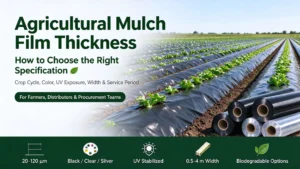
Why Thickness Matters in a Mulch Film Program
Thickness affects how a film is handled, laid, cut, folded, and exposed in the field. It also changes roll weight and the amount of material used per square meter. For a farm or distributor, those details influence installation labor, packaging, shipping calculations, and the consistency of repeat orders.
Thickness is only one part of the specification. Two films with the same nominal gauge can behave differently if their resin system, color, co-extrusion, additives, width, or manufacturing tolerance is different. Buyers should therefore use thickness as a starting point for a full specification rather than as a standalone quality score.
Start With Crop Cycle and Laying Method
Before requesting a thickness, describe how the film will be used. Include the crop, expected covering period, local weather, soil surface, and installation process.
Important questions include:
- Is the film intended for a short seasonal crop or a longer production cycle?
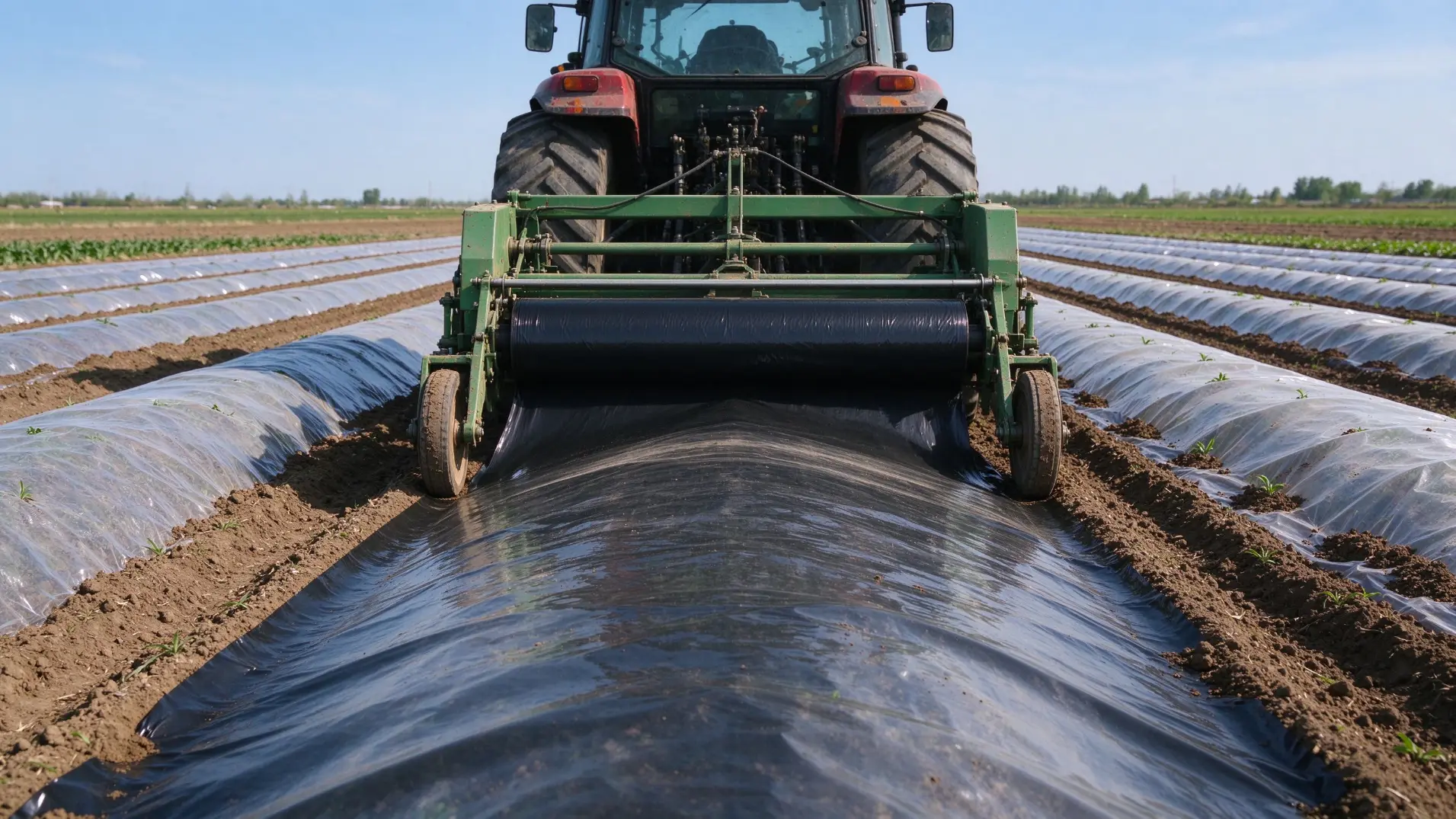
- Will it be laid by hand or with mechanical equipment?
- Will the soil be smooth, stony, wet, dry, or heavily worked before laying?
- Will the film be exposed to strong sun, wind, rain, or repeated field traffic?
- Does the crop require planting holes, drip-line placement, or a defined bed width?
- Will the film be removed after harvest, collected for recycling, or managed as a biodegradable product?
These answers help a supplier recommend a practical thickness range and identify other values that must be tested. A buyer who provides only “black mulch film” leaves too many variables unresolved.
What Thickness Does—and Does Not—Tell You
Thickness and mechanical handling
A film must survive the selected laying process without unacceptable tearing, stretching, or edge damage. Handling depends on more than gauge. Resin formulation, elongation, tensile behavior, roll winding, temperature, soil preparation, and equipment settings all matter.
Ask how thickness is measured, what tolerance applies, and whether the sample represents the intended production structure. For mechanical laying, also confirm roll width, winding direction, roll length, core, and the way the film is expected to respond to tension from the equipment.
Thickness, light behavior, and color
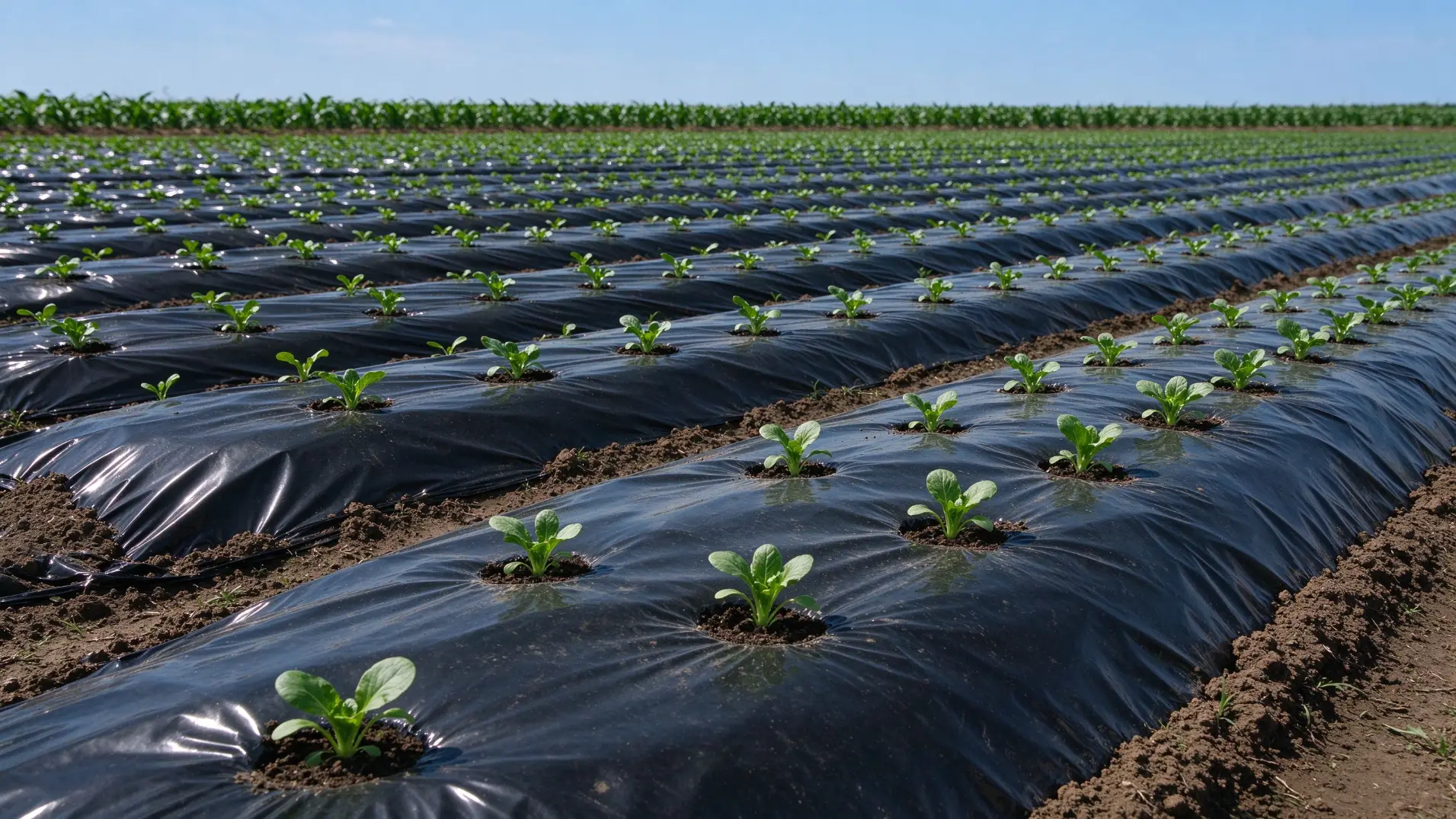
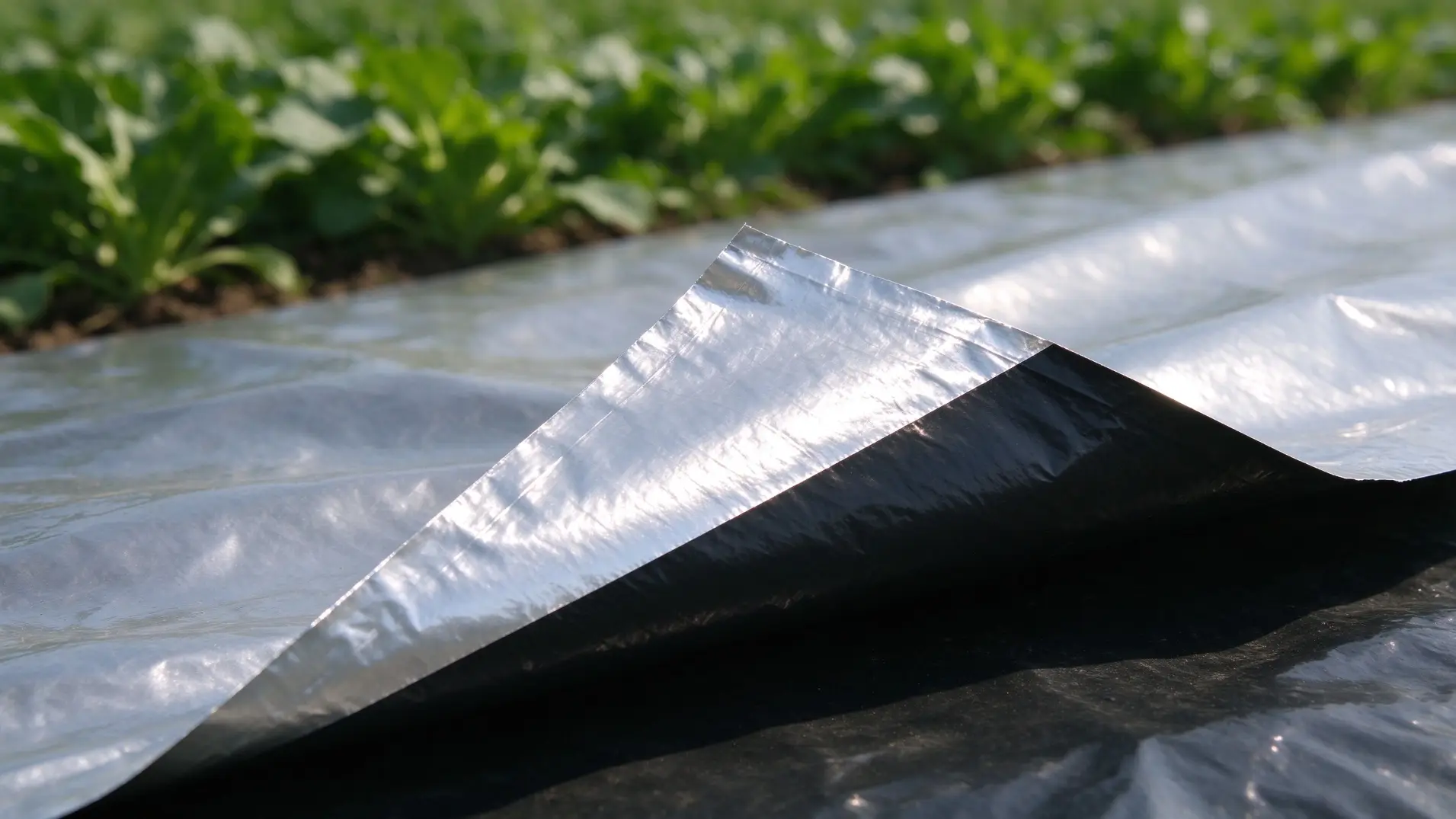
Thickness alone does not determine whether a film blocks or transmits light. Color and opacity are equally important. Black film is generally selected when reducing light at the soil surface is a priority. Clear film allows more light to reach the soil and may be considered when early soil warming is part of the production objective. Silver-black film combines an opaque lower surface with a reflective upper surface in the product structure.
The correct color depends on crop, season, weed pressure, temperature goals, and local practice. Buyers should request opacity or light-transmission information when that property is important rather than assuming that a thicker film always blocks more light.
Thickness and outdoor exposure
Sunlight, temperature, wind, soil contact, and handling all affect outdoor performance. UV stabilization can support a film’s exposure requirement, but a general statement such as “UV resistant” is not a guaranteed service-life figure. Ask what UV treatment is specified, how it is documented, and which climate or exposure assumptions apply.
The expected covering period should be written into the purchasing brief. A film for a short crop cycle and a film expected to remain intact through a longer season may require different combinations of thickness, formulation, color, and UV stabilization.
Compare Film Types Before Choosing a Gauge
Black mulch film
Black film is commonly considered where light reduction at the soil surface and weed management are important. For a quotation, describe the crop, bed layout, laying method, expected exposure, and whether the film will be removed after harvest. Do not choose a thickness from color alone.
Clear mulch film
Clear film allows more solar energy to reach the soil than an opaque black surface. It may be considered where soil warming is a priority, but the target thickness still needs to match the crop cycle, handling method, wind exposure, and field preparation. Confirm how the film’s optical behavior is measured if warming performance is part of the brief.
Silver-black film
Silver-black film uses a reflective upper surface and an opaque lower surface. Buyers should confirm which side faces upward, how the color structure is produced, and whether the delivered roll has consistent surface appearance. Width, thickness, wind exposure, and laying method should be approved together.
Co-extruded film
Co-extruded film combines layers in one film structure. Different layers can be designed to provide different color, opacity, or functional roles. Ask the supplier to identify the layer structure at a level appropriate for the purchase, and confirm thickness tolerance across the finished film rather than assuming every layer has the same gauge.
Biodegradable film
Biodegradable film should be selected by crop duration, soil conditions, climate, local disposal practice, and any market or certification requirement. A biodegradable label does not by itself define the breakdown schedule in every field. Confirm the formulation, expected use period, documentation, and end-of-season handling before placing an order.
ZNY Agri’s published product information identifies fully biodegradable and PBAT/PLA-based options. It does not confirm one universal breakdown period, certification, or crop-specific thickness for every biodegradable order.
Other Specifications to Confirm
When comparing agricultural mulch film thickness, also record:
- Finished width and usable coverage width
- Roll length, core, winding direction, and roll weight
- Thickness tolerance and measurement method
- Tensile strength, elongation, and resistance to tearing
- Color, opacity, or light-transmission requirement
- UV stabilization and exposure reference
- Perforation pattern or planting-hole layout
- Packaging, labels, private-label artwork, pallets, and container loading
- Sample approval, inspection points, and retained production reference
ZNY Agri lists common widths from 0.5–4 m and common roll lengths of 50 m, 100 m, and 200 m. These published formats should not be interpreted as confirmation that every thickness and film type is available in every dimension.
A Practical RFQ Checklist
Send a supplier a brief that includes:
- Crop and planting schedule
- Desired covering period
- Hand or mechanical laying method
- Soil and weather conditions
- Preferred color or co-extruded structure
- Target thickness range and acceptable tolerance
- Finished width, roll length, and total quantity
- UV requirement and perforation needs
- Packaging, labeling, and destination
- Sample and inspection requirements
Ask the supplier to separate published options from order-level confirmations. A quotation should state the actual thickness, tolerance, width, roll format, material system, packing method, and requested quantity. MOQ, price, stock, production schedule, capacity, export documents, and testing should be confirmed in writing rather than inferred from a general product page.
How to Validate a Thickness Before a Bulk Order
Sample approval should reproduce the conditions that matter in the field. Check the sample with the intended laying tools or equipment, not only on a clean desk. Look at whether the edge stretches, whether the roll unwinds consistently, and whether perforations remain aligned with the bed plan. If the film will be installed over raised beds, include the same bed shape and tension pattern in the review.
Record the sample identification, nominal thickness, measured readings, width, color, roll direction, and packaging. If several points are measured across the film, note where the readings were taken and how the values will be interpreted. This prevents a single convenient measurement from being treated as the entire production result.
Field conditions also matter after laying. Buyers should note whether wind lifts the edge, whether soil preparation creates sharp contact points, and whether the film remains compatible with drip lines, planting holes, and harvesting work. A short written trial record can help the purchasing team decide whether a change in gauge, color, width, or formulation is actually needed.
For distributors, keep the approved sample and specification with the product code and packaging artwork. That record gives the next quotation a clear starting point and helps separate a genuine product improvement from an unrequested change. It also gives downstream customers a more accurate explanation of what the roll is designed to do and what conditions still require local testing.
Frequently Asked Questions
What is agricultural mulch film thickness measured in?
Film thickness is commonly stated in micrometers (μm) or millimeters (mm). The supplier should identify the measurement method and tolerance so two quotations can be compared on the same basis.
Is thicker mulch film always better?
No. The suitable gauge depends on crop cycle, laying method, field conditions, color, UV requirement, and end-of-season handling. A thicker film may add material and handling weight without solving the buyer’s main field problem.
What mulch film thickness does ZNY Agri publish?
The product page lists common thicknesses from 6–80 μm. The correct value for a specific crop, color, structure, width, and order must be confirmed with the supplier.
Should black, clear, and silver-black film use the same thickness?
Not automatically. Color changes the film’s light behavior and field objective, while thickness affects material use and handling. Compare color, opacity, crop cycle, exposure, and installation together.
How should buyers compare biodegradable mulch film?
Request the formulation, intended use period, climate assumptions, documentation, and end-of-season management instructions. Do not assume that a generic biodegradable claim guarantees the same breakdown behavior in every field.
Request a Mulch Film Specification Review
If you are sourcing agricultural mulch film, send ZNY Agri your crop, covering period, laying method, preferred color, target thickness, finished width, roll length, quantity, packaging, and destination. Review the agricultural mulch film product page for published film types and customization categories, then use the Contact Us page to request an order-specific discussion.
For coordinated protected-cultivation projects, you can also review the Greenhouse Film Manufacturer page and the wider Products page. Before approval, request the current data sheet, sample, thickness tolerance, roll details, inspection points, packaging, MOQ, schedule, and commercial terms in writing.
Agricultural mulch film thickness is a specification decision, not a standalone ranking. The best purchase brief connects the gauge to the crop cycle, laying method, color, exposure, and supply plan. That approach gives growers and B2B buyers a clearer basis for samples, quotations, and repeat orders.