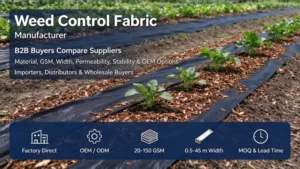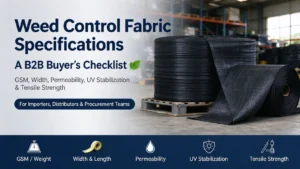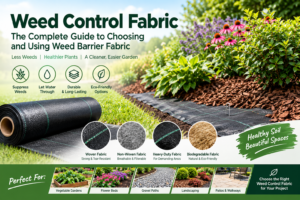
If you are looking for an effective way to control weeds in your garden, landscape, flower beds, pathways, or outdoor spaces, weed control fabric can be a practical solution. Also known as weed barrier fabric, landscape fabric, or weed control matting, this material is designed to reduce weed growth while allowing water and air to reach the soil.
Unlike chemical weed killers, weed control fabric works as a physical barrier. When properly selected and installed, it can significantly reduce the amount of time you spend pulling weeds and maintaining your garden.
In this complete guide, we will explain what weed control fabric is, how it works, the different types available, how to install it correctly, and how to choose the right fabric for your project.
What Is Weed Control Fabric?
Weed control fabric is a permeable material placed over soil to prevent or reduce the growth of unwanted plants.
Most weed control fabrics are made from durable synthetic materials such as polypropylene or polyethylene. The fabric is designed with a structure that blocks sunlight while allowing water and air to pass through.
By limiting the amount of sunlight that reaches the soil surface, the fabric makes it much more difficult for weed seeds to germinate and existing weeds to grow.
Weed control fabric is commonly used in:
- Vegetable gardens
- Flower beds
- Landscaping projects
- Driveways
- Garden pathways
- Gravel areas
- Patios
- Greenhouses
- Nurseries
- Commercial landscaping
- Around trees and shrubs
The fabric can be covered with mulch, gravel, bark, decorative stone, or other landscaping materials to improve its appearance and provide additional protection.
How Does Weed Control Fabric Work?
The main purpose of weed control fabric is to create a physical barrier between the soil and sunlight.
Most weeds require sunlight, moisture, air, and suitable soil conditions to grow. When the fabric blocks sunlight, weed growth is reduced.
At the same time, a quality permeable fabric allows rainwater and irrigation water to pass through.
The basic process is:
Soil → Weed Control Fabric → Mulch, Gravel, or Other Covering
The fabric blocks light from reaching the soil while maintaining water permeability.
However, weed control fabric is not a permanent guarantee that weeds will never appear. Wind can carry seeds onto the surface, and organic material can accumulate above the fabric over time. Those new weeds may grow on top of the barrier.
For this reason, regular maintenance is still important.
Benefits of Using Weed Control Fabric
There are several reasons why homeowners, gardeners, and landscaping professionals use weed control fabric.
1. Reduces Weed Growth
The primary benefit is weed suppression.
By blocking sunlight and creating a physical barrier, the fabric makes it harder for weeds to establish themselves.
This can reduce the amount of manual weeding required throughout the growing season.
2. Saves Time on Garden Maintenance
Pulling weeds repeatedly can become a time-consuming task, especially in large landscaping areas.
Once properly installed, weed control fabric can reduce ongoing maintenance and make the area easier to manage.
3. Allows Water to Pass Through
Permeable weed control fabrics are designed to allow water to penetrate into the soil.
This means irrigation and rainfall can reach plant roots while the fabric continues to block light.
4. Helps Keep Gravel and Mulch Areas Cleaner
Weed control fabric is particularly useful underneath gravel, decorative stone, and bark mulch.
Without a barrier, weeds can grow through these materials and make pathways and landscaping areas difficult to maintain.
5. Can Help Separate Soil From Landscaping Materials
Landscape fabric can also act as a separation layer between soil and materials such as gravel.
This can help prevent soil and gravel from mixing over time and may make maintenance easier.
6. Durable and Reusable Options Are Available
Some high-quality woven weed control fabrics are designed for long-term outdoor use.
Their lifespan depends on the material, UV resistance, installation method, exposure, and the conditions of the site.
Types of Weed Control Fabric
Not all weed control fabrics are the same. Choosing the right type depends on where and how you plan to use it.
Woven Weed Control Fabric
Woven fabric is manufactured by weaving polypropylene or similar materials together.
It is generally strong and tear-resistant, making it suitable for areas where durability is important.
Common applications include:
- Landscaping
- Gravel paths
- Garden beds
- Commercial planting areas
- Walkways
- Large outdoor areas
Woven fabric is often a good option when you need a durable barrier that can withstand outdoor conditions.
Non-Woven Weed Control Fabric
Non-woven landscape fabric is manufactured by bonding fibers together rather than weaving them.
It can provide good filtration and drainage characteristics.
Non-woven fabrics may be used in landscaping, drainage applications, and areas where filtration is particularly important.
Heavy-Duty Weed Control Fabric
Heavy-duty weed control fabric is designed for demanding applications.
It is typically thicker and stronger than lightweight garden fabric.
Heavy-duty options may be appropriate for:
- Gravel driveways
- Commercial landscaping
- Walkways
- High-traffic areas
- Long-term landscaping projects
When selecting heavy-duty fabric, consider the expected foot traffic, vehicle traffic, soil conditions, and covering material.
Biodegradable Weed Control Fabric
Some weed control materials are made from natural fibers such as jute or other biodegradable materials.
These products can gradually break down over time.
They may be suitable for short-term applications or projects where biodegradability is an important consideration.
However, biodegradable fabric generally does not provide the same long-term durability as synthetic landscape fabric.
Weed Control Fabric vs. Plastic Sheeting
Plastic sheeting and weed control fabric may appear similar, but they work differently.
Plastic sheeting typically creates a much less permeable barrier. Water and air may have difficulty passing through it.
Weed control fabric, on the other hand, is specifically designed to provide weed suppression while maintaining permeability.
For garden beds and landscaping, permeable landscape fabric is generally more suitable than ordinary plastic sheeting.
Weed Control Fabric vs. Mulch
Mulch and weed control fabric are not necessarily competing solutions.
They can be used together.
Mulch provides several landscaping benefits, including improving appearance and helping protect the soil surface.
Weed control fabric provides an additional physical barrier against weed growth.
A common installation is:
Soil → Weed Control Fabric → Mulch
Using both materials can provide better weed management than relying on either material alone.
How to Choose the Right Weed Control Fabric
Choosing the correct fabric is important because different applications require different levels of strength and permeability.
Consider the following factors.
Material
Look for a fabric made from a durable material designed for outdoor use.
Polypropylene is commonly used because it can provide good strength and resistance to outdoor conditions.
Thickness and Weight
The thickness or weight of the fabric can affect its durability.
Lightweight fabric may be suitable for flower beds or temporary projects, while heavier fabric may be better for pathways and areas exposed to greater physical stress.
UV Resistance
If the fabric will remain exposed to sunlight, UV resistance is important.
Ultraviolet radiation can gradually degrade many synthetic materials.
If possible, choose a product designed for outdoor and long-term use.
Water Permeability
A good landscape fabric should allow water to move into the soil.
Before purchasing, check the manufacturer’s specifications for permeability and drainage characteristics.
Width and Length
Measure your project area before purchasing.
Buying rolls that match the dimensions of your garden or landscaping area can reduce cutting and waste.
Installation Method
Some fabrics are easier to install than others.
Consider whether you will need landscape staples, pins, cutting tools, or additional covering material.
How to Install Weed Control Fabric
Proper installation is essential if you want the fabric to perform effectively.
Step 1: Remove Existing Weeds
Before installing the fabric, remove existing weeds, roots, and large debris.
Do not simply cover large weeds with the fabric.
Persistent weeds may continue to grow underneath the barrier.
Step 2: Prepare the Soil
Level the area and remove rocks, sticks, and sharp objects that could damage the material.
A smooth soil surface makes installation easier.
Step 3: Measure the Area
Measure the length and width of the installation area.
Add some extra material around the edges so the fabric can be secured properly.
Step 4: Roll Out the Fabric
Lay the weed control fabric across the prepared soil.
Keep the fabric as flat as possible.
Avoid unnecessary folds and gaps.
Step 5: Overlap Seams
If you need multiple pieces of fabric, overlap the edges.
The recommended overlap depends on the product, but several inches of overlap is commonly used.
Avoid leaving gaps between sections because weeds can grow through exposed soil.
Step 6: Secure the Fabric
Use landscape staples or suitable ground pins to secure the fabric.
Place additional staples around edges, seams, corners, and other areas where the fabric may move.
Step 7: Cut Openings for Plants
If you are installing fabric around existing plants, carefully cut openings large enough for the plants.
Avoid creating unnecessarily large holes because exposed soil provides space for weeds to grow.
Step 8: Add Mulch or Gravel
Cover the fabric with mulch, bark, gravel, or another suitable landscaping material.
This helps protect the fabric from UV exposure and improves the appearance of the finished project.
Common Weed Control Fabric Installation Mistakes
Even high-quality landscape fabric can perform poorly if installed incorrectly.
Leaving Gaps Between Fabric Sections
Small gaps can provide enough space for weeds to emerge.
Make sure adjacent sections overlap properly.
Installing Over Existing Weeds
Covering weeds without removing them first can allow persistent plants to continue growing.
Always prepare the area before installation.
Using Too Few Landscape Staples
Wind, rain, and foot traffic can move unsecured fabric.
Secure the material adequately, particularly around the edges and seams.
Leaving the Fabric Exposed
Most landscape fabrics perform better when covered with mulch, gravel, or another protective material.
Long-term exposure to sunlight can accelerate deterioration.
Cutting Oversized Plant Holes
Large openings around plants leave exposed soil where weeds can grow.
Cut openings as close to the required size as practical without restricting the plant.
Can Weeds Grow Through Weed Control Fabric?
Yes, weeds can sometimes grow through weed control fabric.
There are several possible reasons.
First, some weeds are strong enough to push through weak or damaged material.
Second, weed seeds can accumulate on top of the fabric. Organic debris and soil can build up over time, creating a new growing medium above the barrier.
Third, weeds can emerge through gaps, seams, and oversized openings.
Therefore, weed control fabric should be viewed as a weed-management tool rather than a completely maintenance-free solution.
Periodic inspection and removal of weeds can help maintain the effectiveness of the installation.
How Long Does Weed Control Fabric Last?
The lifespan of weed control fabric varies significantly.
Factors that affect durability include:
- Material quality
- Fabric thickness
- UV exposure
- Foot traffic
- Vehicle traffic
- Soil conditions
- Installation quality
- Covering material
- Weather conditions
- Maintenance
A fabric that is properly installed and covered may last considerably longer than one that is continuously exposed to direct sunlight and physical wear.
Always check the manufacturer’s product specifications for expected service life.
Is Weed Control Fabric Good for Vegetable Gardens?
Weed control fabric can be useful in vegetable gardens, particularly around pathways and certain planted areas.
However, gardeners should consider how the material affects soil management and future planting.
For annual vegetable gardens where plants are moved or replanted frequently, fabric can sometimes make planting and soil preparation less convenient.
It may be particularly useful in permanent planting areas, around established plants, or between garden rows.
Is Weed Control Fabric Good for Flower Beds?
Yes. Weed control fabric is commonly used in flower beds.
It can be installed around perennial plants and covered with mulch or decorative materials.
When installing around flowers and shrubs, make sure the fabric does not restrict the natural expansion of plant stems or trunks.
Can You Put Weed Control Fabric Under Gravel?
Yes. Installing weed control fabric beneath gravel is a common landscaping application.
A typical installation includes:
- Remove existing vegetation.
- Prepare and level the soil.
- Install the weed control fabric.
- Secure the fabric with landscape staples.
- Add the desired layer of gravel.
For driveways or areas exposed to vehicle traffic, choose a product specifically designed for the expected load rather than relying on lightweight garden fabric.
Can You Put Weed Control Fabric Under Mulch?
Yes.
Installing weed control fabric under mulch can combine the weed-suppression benefits of the fabric with the appearance and soil-protection benefits of mulch.
However, organic mulch can eventually break down and create a layer where weeds may germinate above the fabric.
Regular maintenance is therefore still necessary.
How to Maintain Weed Control Fabric
Once installed, weed control fabric requires relatively simple maintenance.
Inspect the area periodically for:
- Weeds growing through holes
- Weeds growing above the fabric
- Exposed fabric
- Damaged sections
- Loose landscape staples
- Gaps between fabric pieces
- Accumulated soil and organic debris
Remove weeds as soon as they appear.
If the fabric becomes damaged, repair or replace the affected section when practical.
Frequently Asked Questions About Weed Control Fabric
What is the best material for weed control fabric?
There is no single material that is best for every application. Woven polypropylene fabrics are commonly selected for applications where strength and durability are important, while non-woven materials may be preferred for filtration and drainage applications.
Does weed control fabric stop weeds completely?
No. Weed control fabric can significantly reduce weed growth, but it does not guarantee a completely weed-free area. Weeds can grow through gaps, damaged areas, plant openings, or organic material that accumulates on top.
Does water go through weed control fabric?
Permeable weed control fabrics are designed to allow water to pass through. Always check the product specifications before purchasing.
Can I use weed control fabric without mulch?
Yes, but exposed fabric can be more vulnerable to sunlight and physical damage. Covering it with an appropriate landscaping material can help protect the fabric and improve the appearance of the area.
Do I need landscape staples for weed control fabric?
Landscape staples or ground pins are commonly used to keep the fabric in place. The number required depends on the site conditions and fabric layout.
Can weed control fabric be reused?
Some durable fabrics can potentially be reused if they remain in good condition after removal. However, fabric that is torn, degraded, or heavily contaminated may not be suitable for reuse.
Is weed control fabric environmentally friendly?
The environmental characteristics depend on the material. Synthetic fabrics can provide long-term durability but do not biodegrade quickly. Biodegradable alternatives are available for projects where temporary weed suppression is preferred.
Final Thoughts
Weed control fabric can be a useful part of a broader landscaping and garden maintenance strategy.
The key to successful results is not simply buying the thickest fabric available. The right product should match the application, soil conditions, expected traffic, drainage requirements, and desired service life.
Proper preparation and installation are equally important. Remove existing weeds, prepare the soil, overlap seams, secure the fabric, and protect it with an appropriate layer of mulch or gravel.
When correctly selected and installed, weed control fabric can help reduce weed growth, minimize maintenance, and keep landscaping areas looking cleaner for longer.
If you are planning a garden, landscaping project, gravel pathway, or other outdoor application, choosing the appropriate weed control fabric can make long-term maintenance considerably easier.