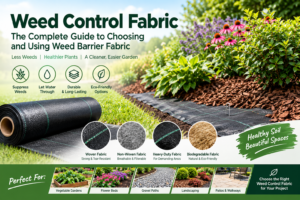
Weeding is the chore every gardener dreads. No matter how careful you are, a single weed leaf seems to appear overnight, spreading roots and stealing water and nutrients from your plants. If you are tired of pulling weeds every weekend, weed control fabric for gardens can help you save hours of work — season after season.
In this guide, we will explain what weed control fabric is, how it stops weeds before they sprout, which type to choose, and how to install it the right way so it actually works.
What Is Weed Control Fabric?
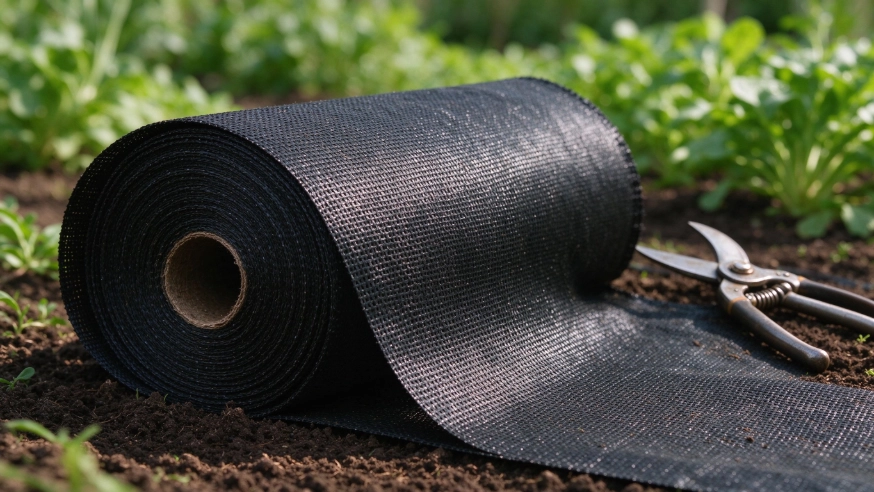
Weed control fabric — also called landscape fabric or garden fabric — is a permeable sheet of woven or non-woven material that you lay over the soil. It blocks sunlight so weed seeds cannot germinate, while still allowing water, air, and nutrients to reach your plants.
It is different from a weed leaf that keeps coming back because of a deep root system. Fabric targets the problem at the source: it stops the seed from turning into a weed in the first place.
Why Does Weed Control Fabric Beat Hand Weeding?
Pulling weeds by hand is endless. Here is why fabric wins:
- Saves time. A single installation protects your beds for years.
- Blocks sunlight. Most weeds need light to sprout. Without it, seeds stay dormant.
- Holds soil moisture. Fabric reduces evaporation, so you water less.
- Keeps soil in place. It slows erosion on slopes and paths.
- Reduces herbicide use. Less weeding means fewer chemicals in your garden.
How Does Weed Control Fabric Stop a Weed Leaf From Growing?
To understand how the fabric works, you need to know how a weed leaf grows. A weed seed germinates when it gets three things: moisture, warmth, and light. Place weed control fabric over the soil and you remove the light. The seed may sprout briefly, but without sunlight the young weed leaf quickly dies beneath the fabric.
When a weed does manage to grow through a gap — for example, at an unsealed edge — it becomes very easy to pull, because its roots stay shallow and weak.
Types of Weed Control Fabric: Woven vs. Non-Woven
Choosing the right fabric matters. The two main types behave differently. Compare fabric weight, water permeability, and UV resistance before selecting a roll.
Woven Landscape Fabric
- Made from tightly woven polypropylene or polyethylene.
- Strong and durable, ideal for paths, gravel areas, and long-term use.
- Allows excellent water flow.
- Best for: flower beds, rock gardens, and under mulch.
Non-Woven (Felt) Landscape Fabric
- Made from bonded fibers, feels like felt or fleece.
- Filters water well and prevents soil from washing into gravel.
- Less tear-resistant than woven types.
- Best for: vegetable beds and areas with heavy foot traffic or steep slopes.
There are also biodegradable fabrics made from jute or coir for short-term projects, and plastic sheets that trap water and are best avoided for most plants.
How to Install Weed Control Fabric for Gardens: Step by Step
Installing it correctly is the difference between a garden that stays clean and one where weeds push through every seam.
Step 1: Clear the area
Remove existing weeds, roots, and stones. For stubborn weeds, dig out the root; otherwise a new weed leaf can grow right through a small gap.
Step 2: Level and amend the soil
Rake the soil flat and add compost if needed. Fabric should lie flush against the ground — bumps create pockets where weeds and water collect.
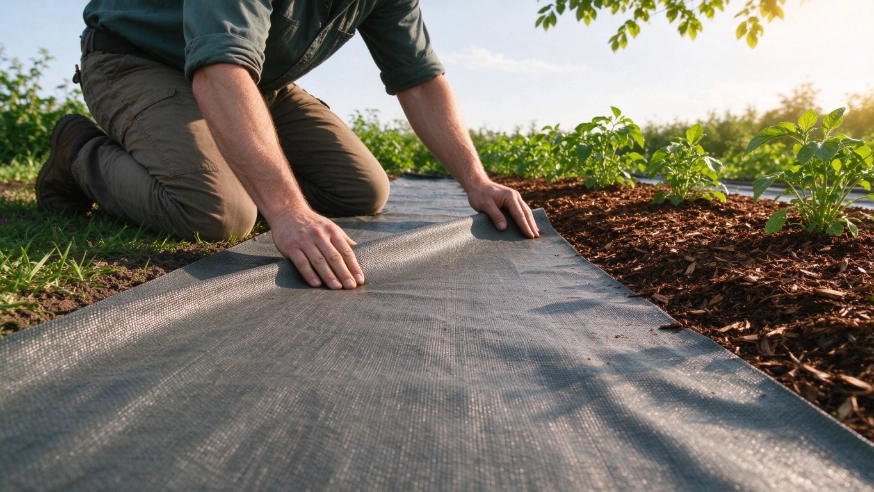
Step 3: Lay the fabric
Unroll the weed control fabric across the bed. Overlap the seams by at least 4–6 inches (10–15 cm) so weeds cannot sneak through the gaps.
Step 4: Secure the edges
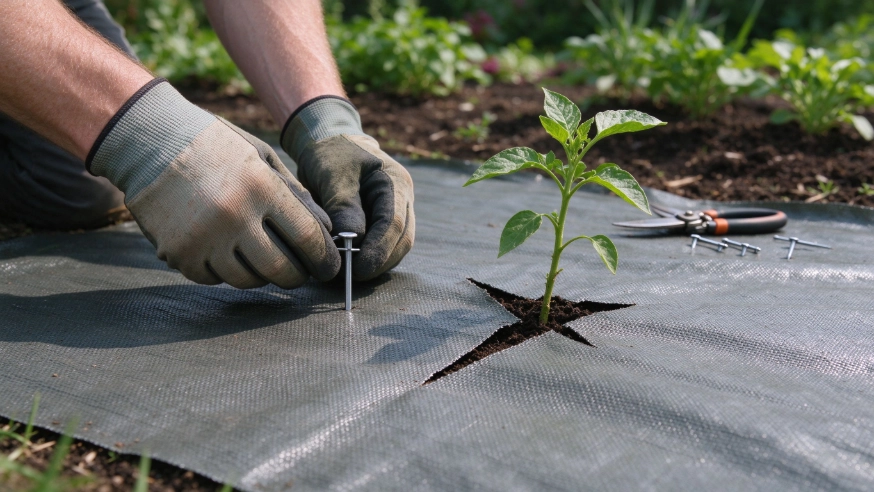
Use landscape staples (pins) every 1–2 feet along the edges and seams. Loose fabric lifts in the wind and lets weeds in.
Step 5: Cut X-shaped openings for plants
For each plant, cut an X and fold back the flaps, plant through the hole, then close the flaps around the stem. This keeps the fabric snug around the plant.
Step 6: Cover with mulch
Spread 2–3 inches of mulch, gravel, or bark on top. This hides the fabric, holds it down, and blocks weeds from germinating on the surface.
Common Mistakes to Avoid
Many gardeners install fabric once, then wonder why weeds still appear. Check for these errors:
- Skipping the mulch. Bare fabric traps heat and can overheat roots — and it looks unfinished.
- Not overlapping seams. Even a 1 cm gap lets a weed leaf through.
- Using cheap, thin fabric. It tears easily and fails within one season.
- Laying fabric on top of weeds. Always clear the ground first.
- Using plastic instead of fabric. Plastic blocks water and air, suffocating soil life.
How Long Does Weed Control Fabric Last?
Quality woven fabric lasts 10–25 years when covered with mulch and installed properly. Non-woven types typically last 5–10 years. Biodegradable options break down within one to three years by design.
Is Weed Control Fabric Safe for Vegetables and Soil?
Yes, when used correctly. Woven and non-woven fabrics let water and air through, so soil microbes and earthworms can still survive below. For vegetable beds, use a fabric that allows water flow and add organic mulch on top. Just remember: fabric is a barrier for weeds, not a substitute for good soil.
Weed Control Fabric vs. Mulch Alone
Mulch alone suppresses weeds for a few months but breaks down and lets weeds through. Weed control fabric combined with mulch gives you the best of both: the fabric blocks weed leaf growth at the root, while the mulch protects the fabric and keeps the bed looking neat.
For guidance on choosing a covering material, see the Royal Horticultural Society’s advice on mulches and mulching.
Frequently Asked Questions
Can I lay weed control fabric over existing weeds?
No. Remove weeds and their roots first. Any leftover root can push through the fabric and keep growing.
Does water soak through weed control fabric?
Yes — that is what makes it “permeable.” Choose a fabric rated for water flow to keep your plants healthy.
What is the best fabric for a gravel path?
Woven landscape fabric is best for paths because it is strong, resists tearing, and lets water drain through.
How do I stop weeds from growing through the holes I cut for plants?
Cut small X-shapes, plant through them, and close the flaps tightly around each stem. Add mulch around the base to cover any exposed soil.
Final Thoughts
A clean garden does not have to mean a weekend of pulling weeds. With the right weed control fabric, installed correctly and covered with mulch, you can stop weed leaf growth before it starts — and enjoy more time actually gardening.
Compare our available roll sizes and material options to find a suitable fabric for your flower beds, vegetable garden, and paths. If you are unsure which type suits your soil, check the product details or contact our team for a recommendation.