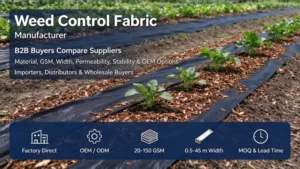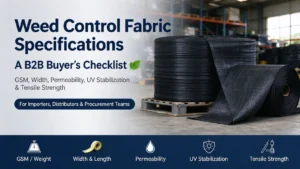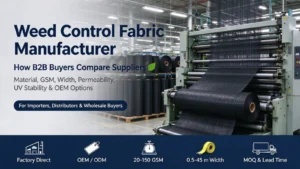
Choosing a weed control fabric manufacturer is a specification and supply decision, not simply a search for the lowest roll price. Agricultural businesses, nurseries, landscapers, importers, and distributors need a ground-cover fabric that matches the application, installation method, climate, and repeat-order plan. They also need clear answers about material, structure, weight, width, permeability, UV treatment, packaging, samples, and delivery planning.
This guide explains what B2B buyers should compare before requesting a quotation. It uses the product information published on ZNY Agri’s weed control fabric manufacturer page and distinguishes confirmed product options from details that still require order-specific confirmation.
What Is Weed Control Fabric?
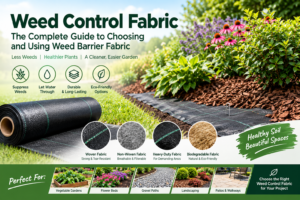
Weed control fabric, also called weed barrier fabric, ground cover, agricultural fabric, landscape fabric, or weed mat, is a permeable covering placed over soil or another prepared surface. Its main job is to reduce light at the surface so weed seeds and existing weeds have less opportunity to grow, while the fabric can still allow water and air movement.
The product is used in orchards, vineyards, greenhouses, nurseries, vegetable and flower beds, farm paths, container areas, and landscaping projects. It may be installed as an exposed walking or growing surface, beneath mulch or stone, or around rows of plants. The right construction depends on whether the priority is tensile strength, flexibility, permeability, surface appearance, soil separation, foot traffic, or long outdoor exposure.
Why Work With a Weed Control Fabric Manufacturer?
A specification-based product recommendation
A manufacturer can discuss the complete specification instead of treating every project as the same roll of fabric. Crop spacing, irrigation, soil condition, weed pressure, UV exposure, expected service period, and installation method all affect the suitable material and weight.
ZNY Agri’s published product information identifies woven PP weed mat, needle-punched ground cover, and customized agricultural landscape fabric. It also describes PP or PE material options, UV stabilization, planting lines, perforation, and custom roll formats. Those options give a buyer a starting framework, but the final selection should still be confirmed against the project brief and sample.
More control over repeat orders and packaging
Importers and distributors often need several widths, consistent roll presentation, private-label packaging, or printed planting guides. Working directly with a weed control fabric manufacturer can make it easier to document the approved material, GSM, dimensions, color, edge treatment, and packaging so a repeat order can be compared against the same reference.
Ask the supplier to separate confirmed options from quotation items. MOQ, capacity, lead time, inventory, shipping route, and printing availability should be confirmed for the specific order rather than assumed from a general product page.
Woven vs. Non-Woven Weed Control Fabric
| Buyer concern | Woven ground cover | Non-woven or needle-punched ground cover |
|---|---|---|
| Structure | Interlaced tapes or yarns create a stable fabric grid. | Fibers are formed into a web and bonded or punched together. |
| Common reason to consider it | Tensile strength, row coverage, and practical permeability for agriculture, nurseries, and paths. | Flexibility, surface coverage, soil separation, or a softer continuous sheet. |
| Installation questions | Confirm edge stability, anchoring, planting lines, and hole layout. | Confirm puncture resistance, drainage, edge behavior, and compatibility with the covering material. |
| Best selection method | Match weave, GSM, width, and UV requirement to the site. | Match fiber structure, GSM, permeability, and expected load to the site. |
Neither structure is automatically better. A woven weed control fabric may be a logical starting point for orchards, greenhouses, nursery aisles, and long planting rows where stable dimensions and tensile performance matter. A needle-punched or non-woven product may suit applications where flexibility or soil separation is more important. The manufacturer should explain the trade-off using samples and measurable requirements.
Key Specifications to Compare
Material and structure
Confirm whether the product is PP, PE, woven, non-woven, needle-punched, or another agreed construction. Ask how the selected structure affects tensile behavior, permeability, handling, and installation. Avoid choosing by color alone; color can affect appearance and market positioning, but it does not replace a technical specification.
GSM, thickness, width, and roll length
ZNY Agri’s published product page lists common weed control fabric weights from 20–150 gsm, widths from 0.5–45 m, and 50 m or 100 m roll lengths, with custom sizes available for suitable orders. These are published product options, not a promise that every combination is available for every order.
For a quotation, provide the required GSM or intended duty, finished width, roll length, total quantity, and packaging format. The buyer should also explain whether the fabric will be exposed, covered with stone or mulch, placed under containers, or used on a path. A heavier fabric is not automatically the best choice if it creates unnecessary handling weight or does not provide the required drainage.
Weed suppression, permeability, and airflow
The fabric should reduce light reaching the soil while allowing irrigation and rainfall to move through the surface. Actual permeability depends on material, GSM, weave or fiber density, surface treatment, soil condition, and installation. Confirm whether the intended system uses drip irrigation, overhead irrigation, rainfall, or a combination.
Good installation also matters. Overlaps, unsealed edges, planting holes, and accumulated organic matter can create places where weeds establish above the fabric. The product reduces weed pressure; it is not a permanent guarantee that no weeds will appear.
UV stability, tensile strength, and edge quality
Outdoor exposure can weaken plastics and fabrics. Ask what UV stabilization is specified, how it is documented, and whether the supplier provides a service-life guideline for the target climate. Also compare tensile strength, tear or puncture resistance, weave stability, width tolerance, edge quality, and color consistency.
If the fabric will be cut, pinned, driven over, or covered by heavy stone, describe those conditions before selecting a construction. Edge finishing, reinforced borders, eyelets, printed lines, or pre-cut holes should be included in the approved specification when required.
Applications in Agriculture, Horticulture, Landscaping, and Nurseries
- Orchards and vineyards: Use the fabric around tree rows or vines where weed reduction, cleaner access, and a manageable soil surface are priorities. Confirm row width, UV exposure, anchoring, and equipment clearance.
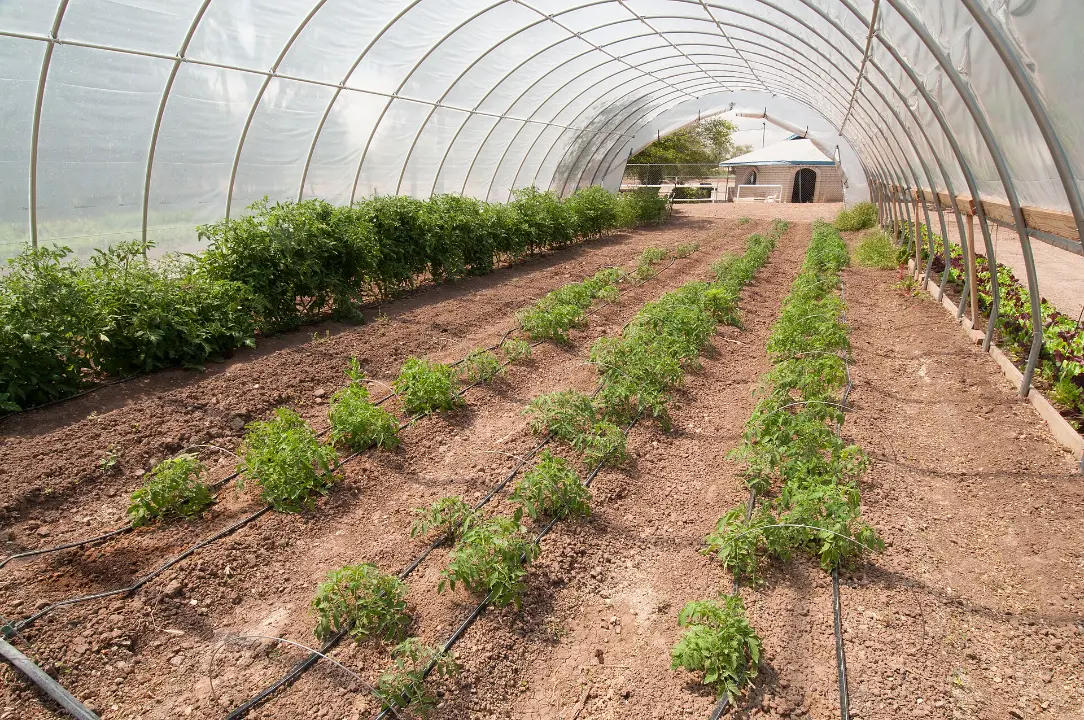
- Greenhouses and nurseries: Match width, permeability, planting lines, and roll format to benches, container spacing, aisles, and irrigation routines.
- Vegetable and flower beds: Consider printed grids or perforation when repeatable spacing can reduce installation time. Confirm hole layout before production.
- Landscaping: Match GSM, permeability, puncture resistance, and edge treatment to mulch, decorative stone, foot traffic, and the expected visual finish.
- Farm paths and ground-cover areas: Wider rolls may reduce seams, but handling and anchoring must be planned for the available labor and equipment.
For coordinated greenhouse projects, buyers can also review integrated greenhouse agriculture solutions and the broader agricultural products range.
If the project also needs a weather cover, compare the ground-cover specification with the greenhouse film manufacturer page rather than treating weed control fabric as a replacement for greenhouse glazing.
Custom Manufacturing and OEM Options
ZNY Agri’s published product information describes OEM and ODM support for material, weight, woven or non-woven structure, color, UV stabilization, planting lines, perforation, roll format, and private-label packaging. For a distributor or importer, those options can help separate product grades, match local planting systems, and present a consistent retail or project specification.
Before approving a custom order, request a written specification that includes:
- Material and structure
- GSM, thickness if applicable, and dimensional tolerances
- Finished width and roll length
- Color and UV requirement
- Permeability or drainage criteria
- Planting-line spacing or perforation layout
- Edge finishing and winding direction
- Labels, printing, bags, cartons, pallets, or private-label packaging
- Sample approval, inspection points, and packing list
- MOQ, production schedule, shipping terms, and destination documents
The product page confirms customization categories, but current MOQ, production capacity, lead time, stock, and shipping arrangements still need order-specific confirmation.
How to Choose a Reliable Manufacturer
Use a short procurement checklist before comparing quotations:
- Does the supplier explain the structure? A credible weed barrier fabric manufacturer should distinguish woven, non-woven, and needle-punched products instead of using one generic label.
- Can the supplier provide a sample? Review GSM, width, weave stability, permeability, edge quality, printing, and roll presentation under your own conditions.
- Are the specifications repeatable? Ask how the approved sample and production specification will be referenced for repeat orders.
- Are quality checks agreed in advance? Define the characteristics that matter: dimensions, GSM, tensile performance, permeability, UV reference, color, and packaging.
- Are commercial details transparent? Confirm MOQ, lead time, capacity, shipping route, payment terms, and export documents in writing.
- Can the supplier support your market? Importers and distributors may need private labels, multilingual packaging, several widths, or consolidated agricultural products.
Do not choose a supplier only because a specification table is long. Choose the manufacturer that can connect the product data to your application and document what will actually be produced.
Frequently Asked Questions
What is the difference between weed control fabric and landscape fabric?
The terms overlap. Agricultural weed control fabric or weed mat is often selected for crop rows, nurseries, greenhouses, and farm paths, while landscape fabric may be specified for decorative stone, mulch, and contractor installations. Compare the actual material, structure, GSM, permeability, UV requirement, and load rather than relying on the label.
Which is better, woven or non-woven ground cover?
It depends on the site. Woven fabric is commonly considered when tensile strength, row coverage, and stable dimensions are important. Non-woven or needle-punched fabric may be considered for flexibility, soil separation, or a softer continuous surface. A sample and application-specific specification are more useful than a universal “best” answer.
What GSM should I order?
Start with exposure, expected service period, weed pressure, puncture risk, foot traffic, installation method, and required permeability. ZNY Agri lists 20–150 gsm as a common product range, but the correct value for a particular order must be confirmed with the manufacturer.
Can a manufacturer add planting lines or perforations?
ZNY Agri’s product page lists planting lines and perforation among its customization options. Confirm the spacing, hole dimensions, tolerance, roll direction, and sample approval before production.
How do I confirm MOQ and lead time?
Send the supplier the material, structure, GSM, width, roll length, quantity, packaging, destination, and any printing or perforation requirements. Ask for MOQ, sample timing, production schedule, current inventory, and shipping details in the written quotation. These items should not be inferred from a general web page.
Request a Quote or Product Consultation
If you are comparing a weed control fabric manufacturer for agriculture, horticulture, landscaping, or nursery supply, send ZNY Agri your application, crop or landscape use, required width and roll format, target market, quantity, printing or planting-line needs, and delivery destination through the Contact Us page. The team can then confirm which product structure and specification are suitable for the project.
Before placing an order, request the current datasheet, sample, approved specification, packaging details, MOQ, lead time, and inspection criteria. That process helps keep the final product aligned with your installation conditions and repeat-supply requirements.